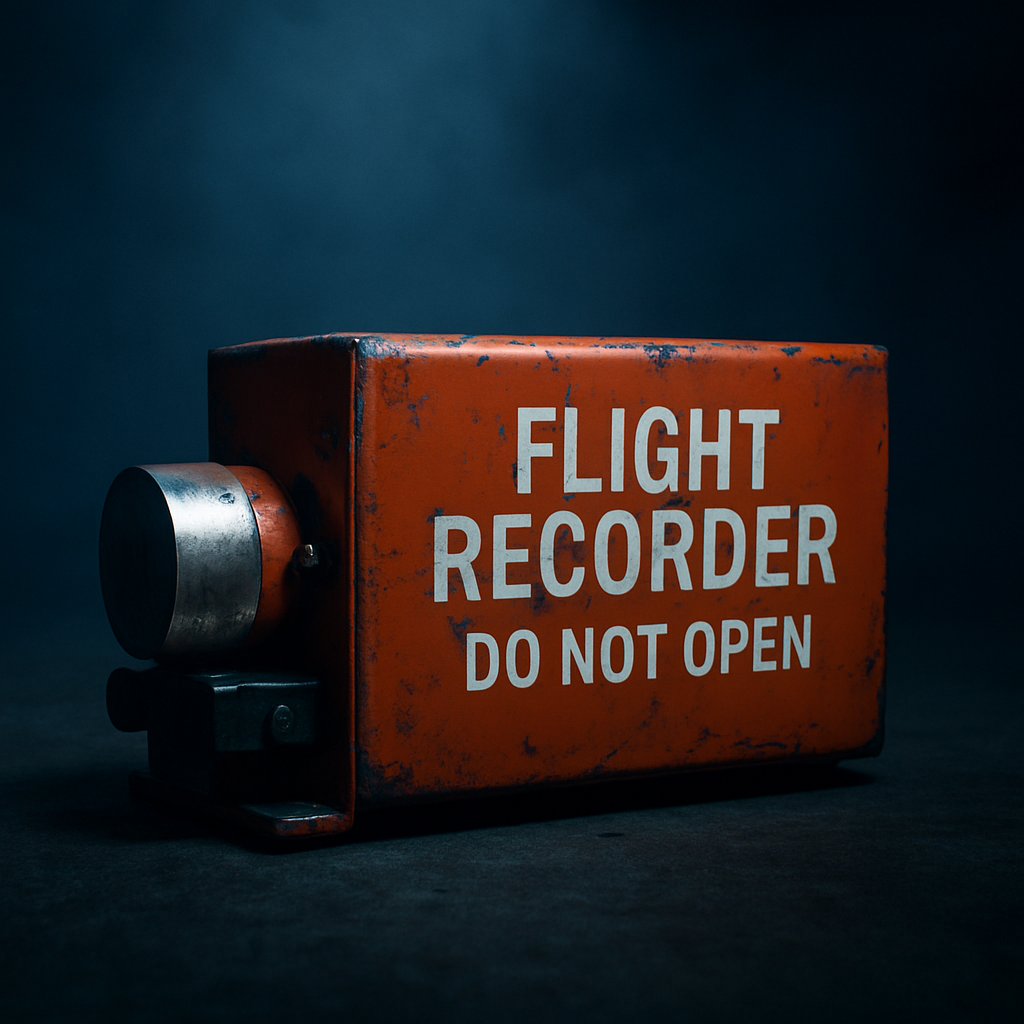

When a plane goes down, there’s one silent witness that speaks for everyone on board: the black box. Officially known as the Flight Data Recorder (FDR) and Cockpit Voice Recorder (CVR), these devices hold the final clues in aviation mysteries. But how do they really work, and why are they so crucial? Let’s dive in.
The Misleading Name: Why It’s Not Black
Despite the name, black boxes are not black at all. They are painted in bright orange with reflective strips, making them easier to spot in wreckage or underwater. The term “black” comes from the early days of aviation, when the devices were associated with crash investigations and tragedy.
What’s Inside a Black Box?
Each black box is built like a tank, designed to survive extreme conditions:
- Crash impact: Can withstand forces up to 3,400 Gs.
- Fire resistance: Can endure temperatures over 1,100°C for an hour.
- Water pressure: Built to survive depths of 20,000 feet underwater.
Inside are two key systems:
- Cockpit Voice Recorder (CVR): Records the last 2 hours of conversation between pilots, alarms, and even background sounds.
- Flight Data Recorder (FDR): Captures hundreds of parameters like altitude, speed, direction, engine performance, and more—up to 25 hours of flight.
How Do They Record?
Black boxes use solid-state memory boards instead of tapes, which are far more durable and reliable. These memory units continuously overwrite themselves, ensuring the latest flight information is always preserved.
Locating the Box After a Crash
Every black box is fitted with an Underwater Locator Beacon (ULB). When submerged, it emits a signal—“pinging” once per second for about 30 days—helping search teams locate it in oceans or lakes.
Why They Matter
In the aftermath of a crash, black boxes are the key to finding out what happened. From pilot errors to mechanical failures, and even unusual weather events, these devices provide investigators with the facts that no eyewitness could reliably give.
The Future of Black Boxes
Some airlines are moving toward real-time flight data streaming, where information is transmitted instantly to ground stations. But for now, the black box remains the ultimate “last witness,” ensuring that every mystery in the sky has a chance to be solved.
✈️ Final Thought: Black boxes don’t prevent accidents, but they make flying safer by ensuring lessons are learned from every tragedy. Without them, the truth could remain forever lost in the wreckage.