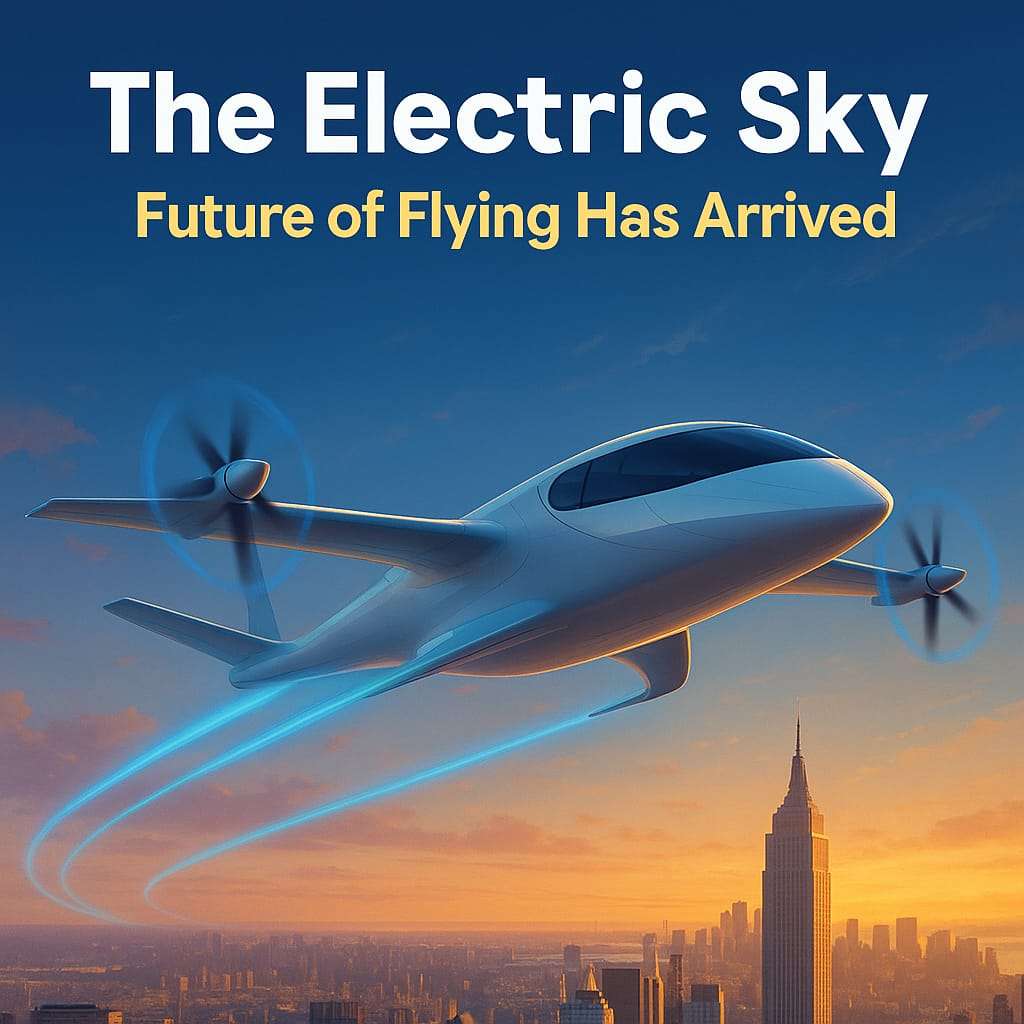

Imagine a world where airplanes don’t roar with deafening engines, don’t burn tons of jet fuel, and don’t leave black smoke trails in the sky. Instead, they glide silently, powered by clean energy, promising a future where flying is cheaper, greener, and more exciting than ever. That’s the bold vision of Electric Aviation Future — the movement that’s rewriting the #FutureOfFlight.
Goodbye Fuel, Hello Future!
For decades, aviation has depended on fossil fuels. But times are changing. Electric aircraft are taking center stage, offering ZeroEmissions flights that don’t harm the environment. This is more than just technology — it’s a revolution in SustainableAviation a step toward cleaner skies and smarter travel.
Jet Engines Out, Electric Motors In
Traditional jet engines are noisy, costly to maintain, and carbon-heavy. In comparison, ElectricAircraft are light, efficient, and eco-friendly. With fewer moving parts, their maintenance costs are much lower. For airlines, this means big savings; for passengers, it could mean cheaper tickets. This transition is not just about saving the planet — it’s about making flying accessible to more people than ever before.
🚖 “Flying Taxis: Your Uber of the Sky”
One of the most exciting developments in electric aviation is EVTOL technology — electric vertical take-off and landing aircraft. Think of them as flying cars or #AirTaxi services that pick you up from your office rooftop and drop you across the city in minutes. Companies like Joby Aviation and Volocopter are racing to launch commercial services, aiming to transform city traffic into smooth, silent skyways. This isn’t sci-fi — it’s the very real FutureOfTransportation.
🔋 “Batteries Are the New Jet Fuel”
The core challenge of electric flight lies in energy storage. Current batteries can’t yet match the energy density of jet fuel. But with rapid advancements in solid-state batteries, hydrogen fuel cells, and hybrid-electric systems, the gap is closing fast. Every breakthrough in AviationTech brings us closer to a future where electric planes can travel longer distances without compromise. And as global #Decarbonization policies push forward, investment in clean aviation technology is only accelerating.
🏙️ “Short Hops Today, Long Journeys Tomorrow”
Right now, electric planes are best suited for regional flights under 500 km. Aircraft like Heart Aerospace’s ES-30 and Eviation’s Alice are already proving this possible. Imagine flying between nearby cities quickly, quietly, and sustainably. That’s today. By 2030, short-haul electric flights could become mainstream, and by 2050, the dream of fully electric long-haul international flights may finally take off.
🔮 “The Sky of Tomorrow”
The shift to electric is more than just an aviation upgrade — it’s a global transformation. From #GreenAviation startups to tech giants investing in AviationInnovation, the world is preparing for an electric sky. Passengers will enjoy quieter, smoother, and cleaner journeys. Cities will embrace flying taxis to cut down on traffic. And airlines will reduce costs while achieving sustainability goals.
The question isn’t if the world will fly electric — it’s only when.
✅ The electric revolution is charging up the skies. The future of aviation is not just about reaching destinations — it’s about doing so responsibly, innovatively, and with vision. The age of #ElectricAviation has arrived. The only question left: Are you ready to board the flight of the future?