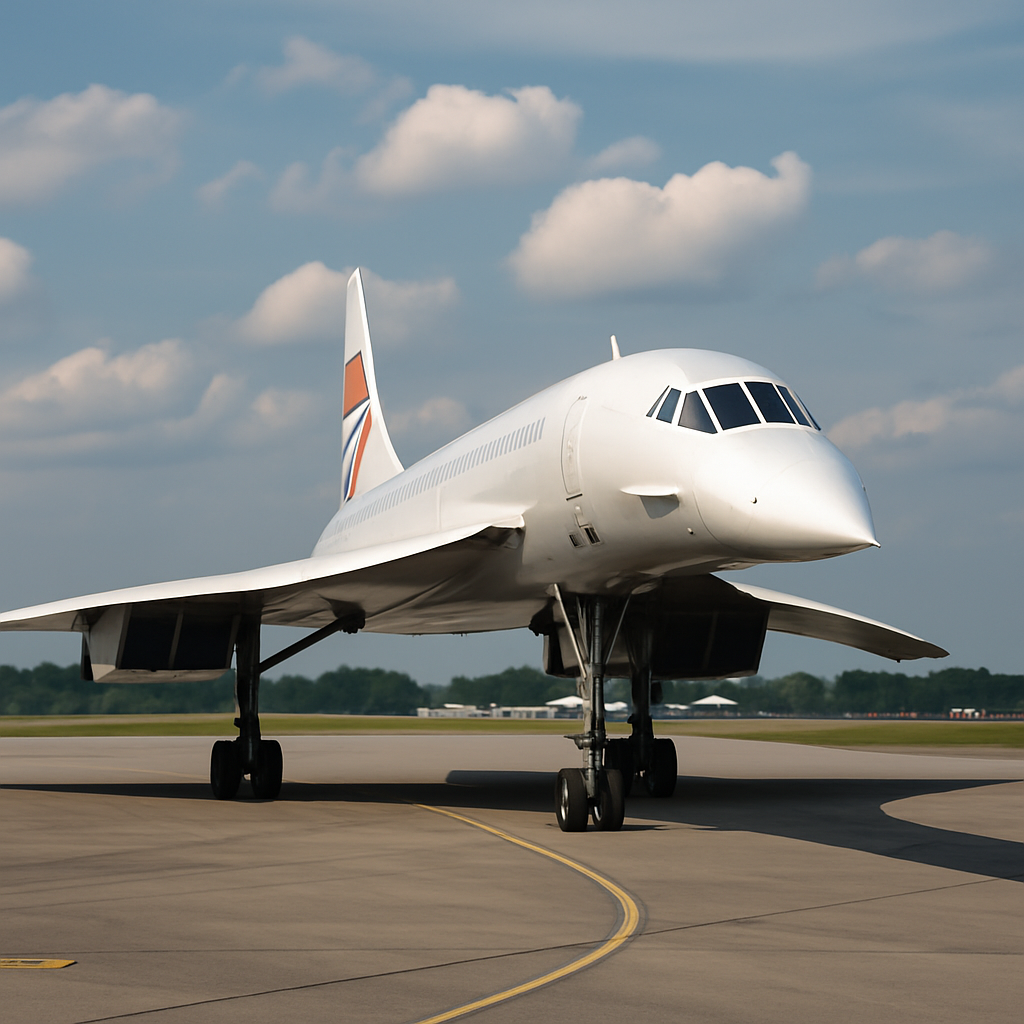

Concorde supersonic aircraft
There are aircraft—and then there was Concorde. Sleek, sharp, and faster than sound, Concorde wasn’t just a plane—it was a symbol of human ambition, a masterpiece of engineering, and a flying legend that rewrote the rules of aviation.
🚀 A Supersonic Beginning
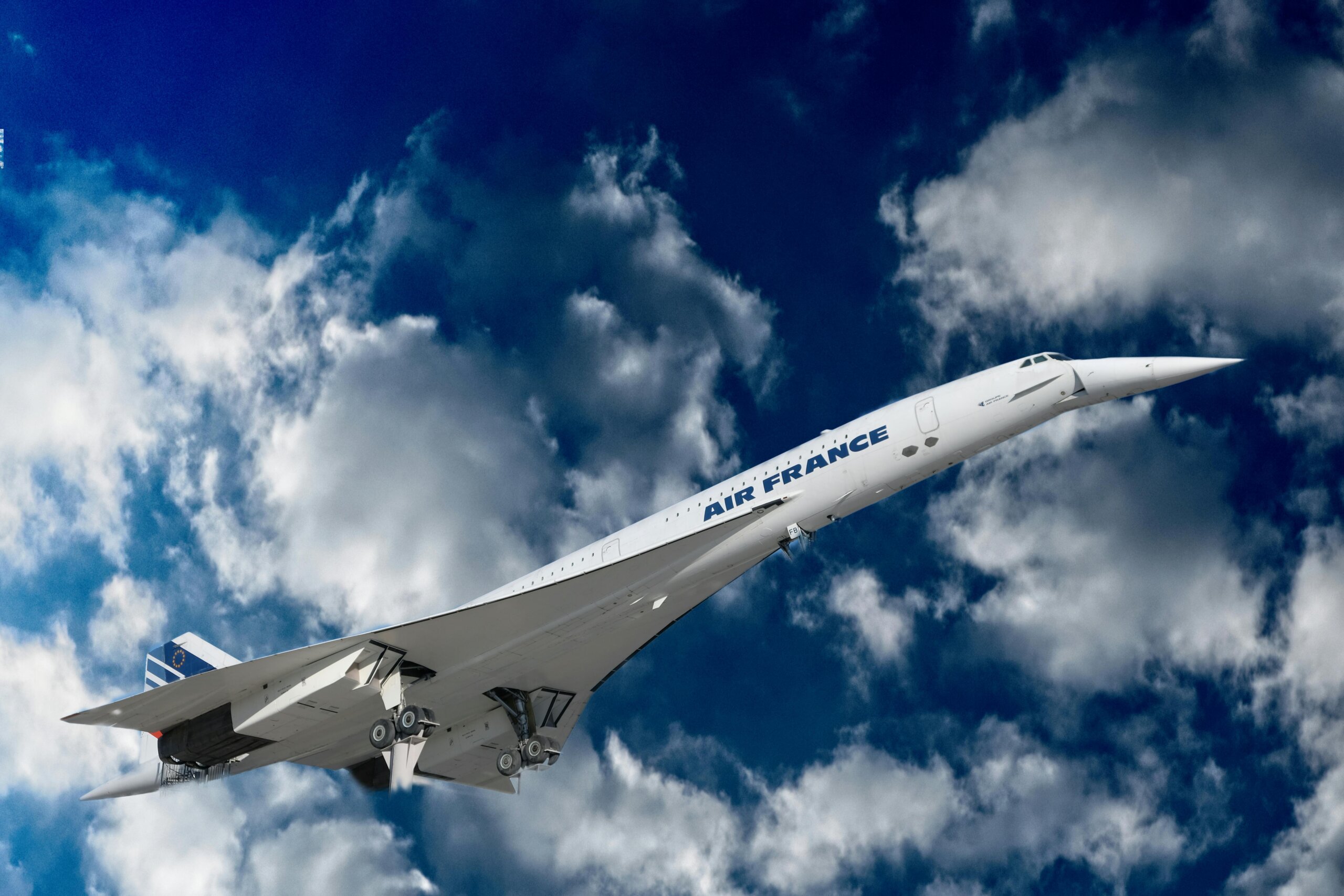
Concorde was born out of a joint venture between British Aircraft Corporation (UK) and Aérospatiale (France) in the 1960s. At a time when commercial air travel was booming, the idea of flying passengers at twice the speed of sound (Mach 2.04) felt like a natural next step. And Concorde delivered—cruising at 60,000 feet and slicing through the sky at over 2,180 km/h (1,354 mph).
It officially entered service in 1976, operated by British Airways and Air France, and quickly became a favorite among celebrities, CEOs, and royalty. With Concorde, you could have breakfast in London and lunch in New York—crossing the Atlantic in under 3.5 hours.
🛩️ The Engineering Marvel
Concorde’s design was as unique as its performance:
-
Delta wings for optimal high-speed flight
-
Nose cone that drooped for better cockpit visibility during takeoff/landing
-
Afterburning Rolls-Royce/Snecma Olympus 593 engines that provided immense thrust
-
Skin that stretched in flight due to heat at Mach 2 speeds
-
Passenger cabin with a maximum capacity of just 100 seats – emphasizing luxury over volume
Flying on Concorde wasn’t about economy—it was about status, speed, and style.
🌍 Iconic Routes
Concorde flew primarily between:
-
London Heathrow ↔ New York JFK
-
Paris Charles de Gaulle ↔ New York JFK
These routes were popular among high-end business travelers who valued time over money. Occasionally, Concorde also made charter flights to places like Barbados, Singapore, or even around-the-world tours.
💥 The Downfall
But even legends have limits. While Concorde was an engineering success, it was always:
-
Expensive to operate
-
Noisy (especially during takeoff)
-
Restricted from flying supersonic over land due to sonic booms
-
Environmentally criticized for its fuel consumption
The final blow came in 2000, when Air France Flight 4590 crashed shortly after takeoff from Paris, killing 113 people. Though the accident was caused by debris on the runway, Concorde’s reputation was shaken. Combined with rising costs, low demand post-9/11, and aging parts, Concorde was retired in 2003.
🕊️ Legacy in the Skies
Even though it no longer flies, Concorde left a permanent mark on aviation history. It proved that supersonic commercial travel was possible and inspired new generations of aircraft designers.
Today, several Concorde aircraft are preserved in museums around the world, including:
-
Intrepid Sea, Air & Space Museum (New York)
-
Manchester Airport (UK)
-
Musée de l’Air et de l’Espace (Paris)
-
Aeroscopia Museum (Toulouse)
And perhaps most exciting: companies like Boom Supersonic are working on new-age, sustainable supersonic jets that might bring back the magic—only greener and quieter.
🛫 Final Thoughts
Concorde wasn’t just a plane—it was a statement. It represented a time when aviation dared to dream faster, fly higher, and bring continents closer. We may not hear the sonic boom again anytime soon, but the echoes of Concorde still live on in every skyward glance and in every ambition to break the boundaries of speed.