
The mid-air door plug blowout aboard Alaska Airlines Flight 1282 in January 2024 remains one of the most disturbing aviation incidents in recent memory. Although the aircraft landed safely and no lives were lost, the consequences of that night continue to unfold. Nearly two years later, the incident has entered a new phase as the pilot in command, Captain Brandon Fisher, has filed a $10 million lawsuit against Boeing, alleging negligence, manufacturing failures, and an attempt to shift blame onto the flight crew.
A Routine Flight Turned Emergency
On 05 January 2024, Alaska Airlines Flight 1282 departed Portland for Ontario, California, operated by a Boeing 737 MAX 9. Just 06 minutes after takeoff, while climbing through roughly 16,000 feet, a mid-cabin exit door plug violently separated from the fuselage.
The sudden decompression ripped personal belongings from the cabin and created a gaping hole in the aircraft’s side. Oxygen masks deployed instantly. Inside the cockpit, Captain Fisher was forced forward by the pressure change, his headset torn away amid intense noise and airflow. Communication with the cabin crew became extremely difficult.
Despite the chaos, Fisher and First Officer Emily Wiprud remained composed, disengaged the autopilot, coordinated with air traffic control, and safely returned the aircraft to Portland. All 171 passengers and 06 crew members survived, though several sustained minor injuries and one flight attendant was hurt near the opening.
What could have been a catastrophe was avoided through decisive crew action—but the technical questions were only beginning.
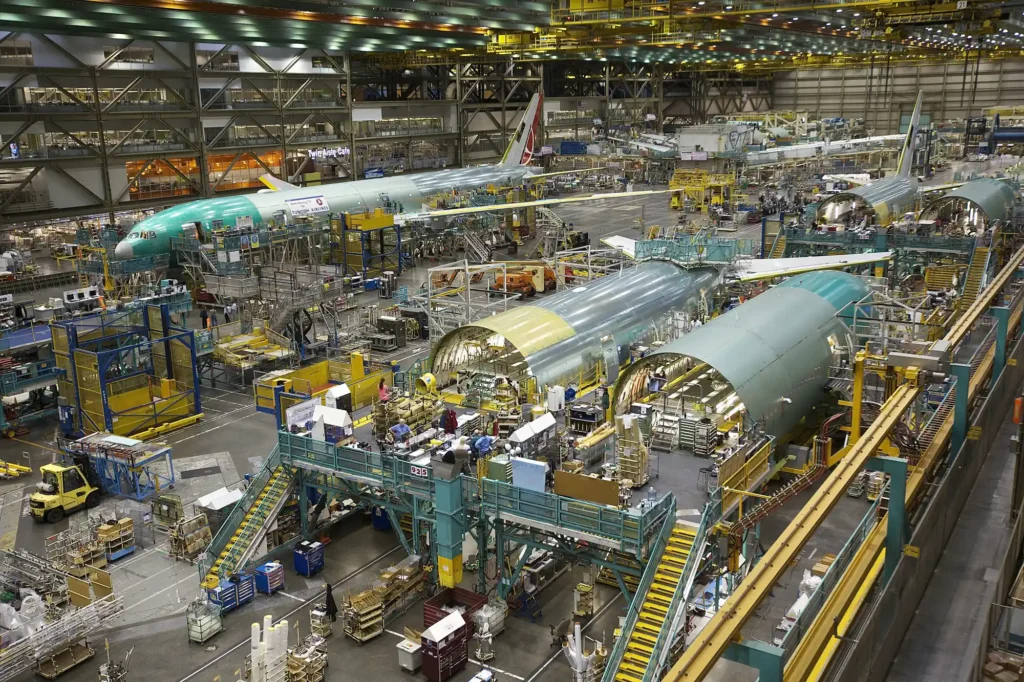
A Boeing manufacturing plant in Everett, Washington.
Credit: Stephen Brashear/Getty images.
Investigation Uncovers Missing Bolts
The National Transportation Safety Board (NTSB) launched a detailed investigation and later revealed a critical finding: the door plug that failed was missing 04 retention bolts—essential components designed to prevent exactly such an event.
In a June 2025 update, the NTSB concluded that the probable cause was Boeing’s failure to provide adequate training, guidance, and oversight to factory workers. The investigation also identified systemic quality-control issues during manufacturing and rework, involving both Boeing and its supplier, Spirit AeroSystems.
The board further stated that the Federal Aviation Administration (FAA) had been ineffective in ensuring Boeing corrected repeated and systemic non-compliance issues related to installation and inspection processes.
By September 2025, the FAA proposed a $3.1 million civil penalty against Boeing, citing multiple safety violations connected to the MAX program, including the Alaska Airlines incident.
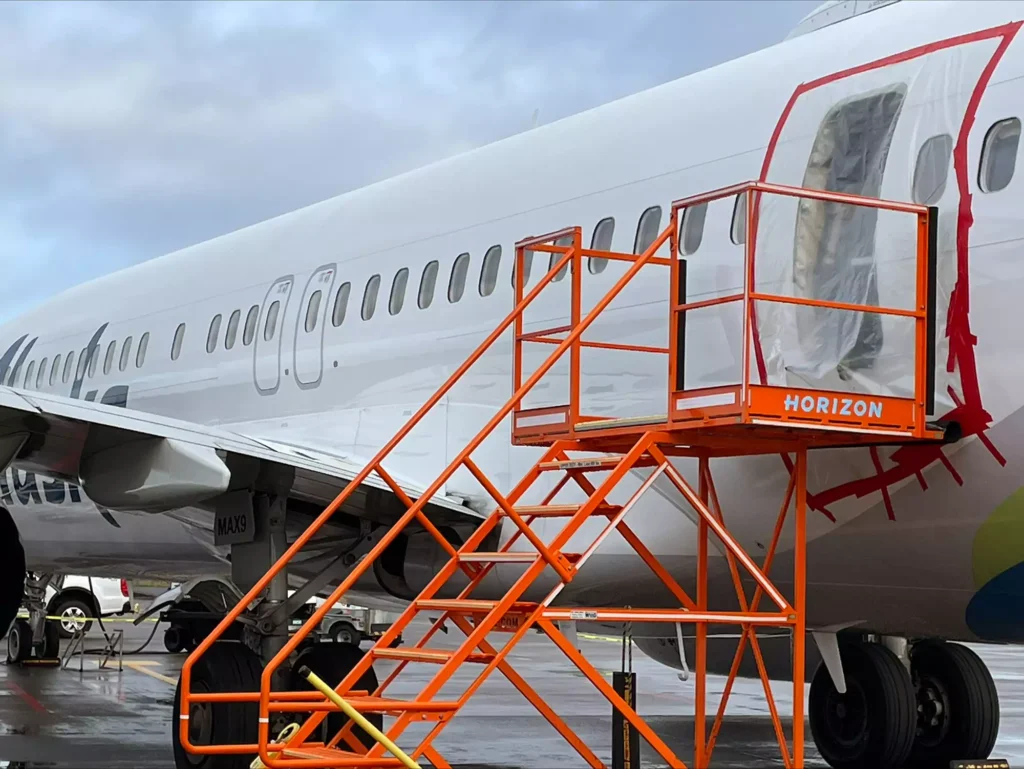
An Alaska Airlines Boeing 737-9 MAX operating Flight 1282, photographed on the ground in Portland, Oregon, in early January 2024.
Credit: NTSB Getty images
Allegations of Blame-Shifting
While regulators ultimately placed responsibility on manufacturing failures, Captain Fisher claims Boeing initially took a different stance.
According to the lawsuit filed on 30 December, Boeing responded to early passenger lawsuits by suggesting the aircraft may have been improperly maintained or operated by parties outside the company. Fisher alleges these statements were misleading and implied pilot error, effectively placing the flight crew under suspicion.
The complaint argues that Boeing attempted to use Fisher as a “scapegoat”, diverting attention from its own production lapses at a time when the company was already facing intense scrutiny over safety and quality issues.
“These actions showed a lack of corporate integrity,” the lawsuit states, claiming the fallout had “life-altering personal and professional consequences” for the captain.
Personal Toll on the Flight Crew
Beyond technical failures, the lawsuit highlights the human impact of the incident. Fisher claims he has suffered long-term physical pain, emotional distress, and psychological trauma since the event. Court filings describe lingering symptoms that have limited his physical activity and affected his quality of life.
Compounding the strain, Fisher’s name appeared in multiple passenger lawsuits, forcing him to repeatedly defend his conduct despite later findings confirming the crew acted appropriately and professionally under extreme circumstances.
The complaint also notes that Fisher received a letter from the FBI, advising that he may have been a victim of potential criminal negligence by Boeing. The U.S. Department of Justice subsequently launched a criminal investigation into the manufacturer, which remains ongoing.
A Case with Industry-Wide Implications
Fisher’s lawsuit joins a growing list of legal actions filed by passengers, flight attendants, and crew members from Flight 1282 against Boeing and Spirit AeroSystems. Collectively, these cases accuse the companies of failing to design, manufacture, and deliver a safe aircraft.
For the aviation industry, the case raises broader questions about accountability, safety culture, and crisis response. Should manufacturers immediately accept responsibility when evidence points to internal failures, or rely on legal positioning that risks undermining trust in pilots and frontline professionals?
As the legal process continues, the Alaska Airlines door plug blowout is no longer just a safety incident it has become a defining test of transparency and responsibility in modern aviation.
For an industry built on trust, how this story ends will matter far beyond a single flight.