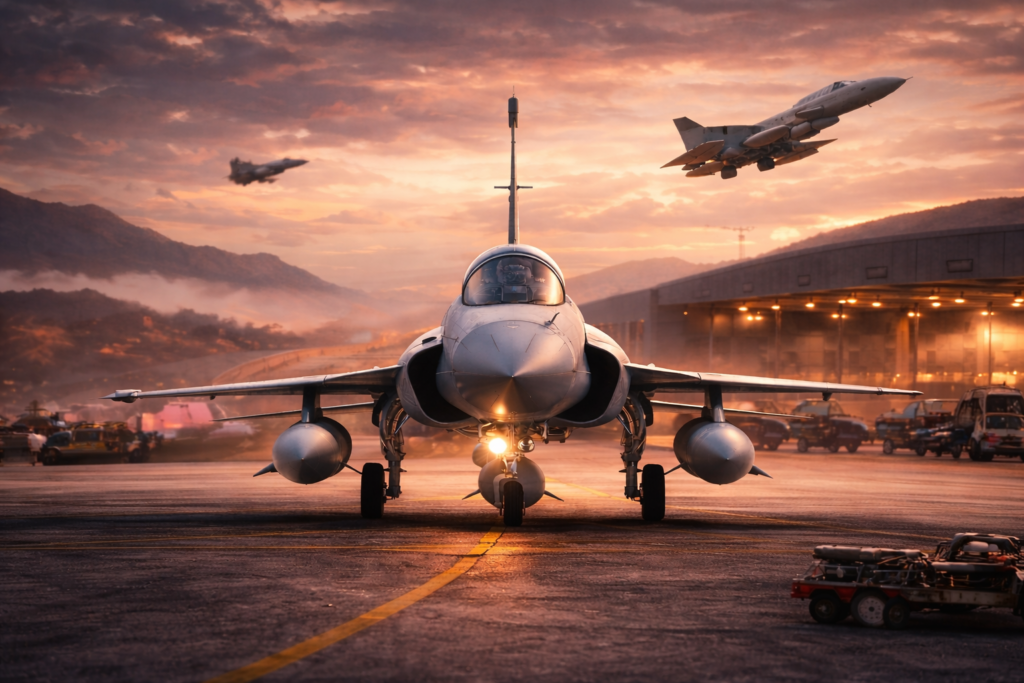

Pakistan’s indigenously developed JF-17 Thunder has steadily evolved from a national defense project into a serious contender in the global fighter aircraft market. Recent diplomatic and military developments particularly Pakistan’s renewed defense engagement with Bangladesh have once again placed the lightweight multirole fighter in the international spotlight.
In early January, a high-level meeting between Pakistan Air Force (PAF) Chief Air Chief Marshal Zaheer Ahmed Babar Sidhu and Bangladesh Air Force (BAF) Chief Air Chief Marshal Hasan Mahmood Khan signaled growing momentum toward a potential JF-17 export deal. While no contract has been formally signed, official statements confirm that detailed discussions on the aircraft’s acquisition have taken place, marking a significant step forward.
A Strategic Opening With Bangladesh
Bangladesh is actively seeking to modernize its aging combat fleet, which includes MiG-29s and F-7s that have been in service for over two decades. For Dhaka, the JF-17 presents a practical solution: a modern fighter with credible combat capability, flexible configuration options, and a price point far below that of Western alternatives.
Pakistan has sweetened the proposal by offering more than just aircraft. Alongside the JF-17, Islamabad has pledged fast-track delivery of Super Mushshak trainer aircraft, comprehensive pilot training, long-term maintenance support, and assistance with integrating air defense radar systems. This bundled approach reflects a broader shift in Pakistan’s defense export strategy selling ecosystems, not just platforms.
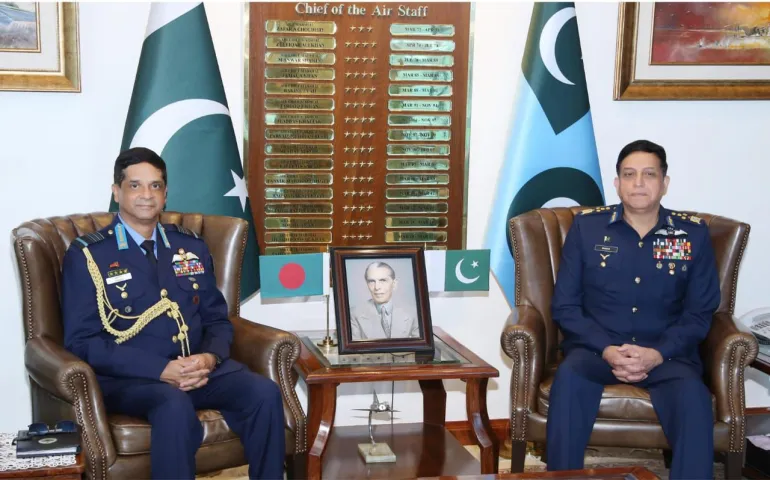
Credit: ISPR
Bangladesh Air Chief Marshal Hasan Mahmood Khan paid an official visit to Islamabad on January 6, where he met with Pakistan’s Air Chief Marshal Zaheer Ahmed Babar Sidhu
Combat Credibility After Regional Tensions
One of the key drivers behind the JF-17’s renewed appeal is its combat credibility. During heightened air tensions between Pakistan and India in 2025, the PAF deployed a mixed fleet that included JF-17 Thunders, J-10C Vigorous Dragons, and F-16 Fighting Falcons. According to Pakistani claims partially acknowledged later by Indian officials the PAF successfully engaged a numerically superior Indian Air Force formation equipped with advanced Western and Russian aircraft.
Former PAF official noted that Pakistan’s performance against significantly more expensive platforms enhanced the JF-17’s reputation among air forces seeking cost-effective but capable solutions. For many developing nations, proven operational performance matters more than prestige branding.
A Growing List of International Operators
Bangladesh is not alone in considering the JF-17. Myanmar became the first foreign buyer in 2015, ordering at least 16 Block II aircraft, several of which are already in service. Nigeria followed in 2021, inducting 03 jets into its air force.
The most notable recent success came in February 2024, when Azerbaijan placed an initial order for 16 JF-17s, valued at over USD 1.5 billion. Later, during its Victory Day parade in November 2025, Baku publicly showcased the aircraft, confirming its status as the third official international operator.
Beyond confirmed customers, several countries including Iraq, Sri Lanka, and Saudi Arabia—have explored the platform over the past decade. Reports have also emerged of discussions to convert Saudi financial loans into potential JF-17 acquisition agreements, although no formal confirmation has been issued.
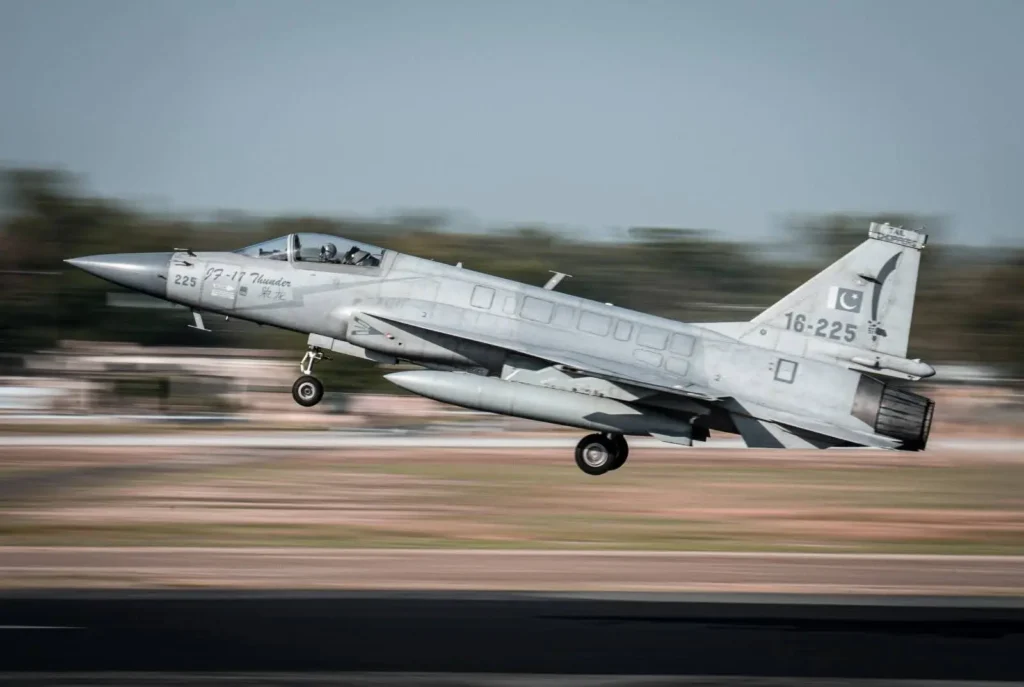
Source: Pakistan Air Force
Why the JF-17 Makes Sense
At an estimated unit cost of USD 25–30 million, the JF-17 occupies a critical niche. It is significantly cheaper than Western fighters like the Rafale, yet far more capable than legacy aircraft still operated across Asia, Africa, and the Middle East.
Jointly developed by Pakistan and China, the aircraft is assembled in Kamra, giving Pakistan full control over production, customization, and after-sales support. This independence is especially attractive to countries that wish to avoid political restrictions often attached to Western defense exports.
While China itself does not operate the JF-17 preferring more advanced platforms such as the J-10, J-20, and the upcoming J-35 its backing in design and systems integration adds credibility to the program.
Defense Exports as Economic Strategy
For Pakistan, exporting the JF-17 is about more than diplomacy, it is also an economic calculation. Senior officials have openly stated that a successful defense export pipeline could significantly ease financial pressure on the country. Large-scale deals, such as the reported USD 4 billion agreement with Libya’s National Army, highlight how defense manufacturing is becoming a pillar of Pakistan’s long-term economic planning.
The Road Ahead
While Bangladesh has not yet signed on the dotted line, the direction is clear. With shifting regional alliances, improving Pakistan–Bangladesh relations, and a growing appetite for affordable modern fighters, the JF-17 Thunder is well-positioned to secure new customers.
From Kamra to potential bases in South Asia, Africa, and beyond, Pakistan’s flagship fighter is no longer just a domestic success story it is rapidly becoming a global one.

Your Window to the World Above!